Season 5 · Episode notes
ep. 510 - Ancient Maps and Lost Civilizations
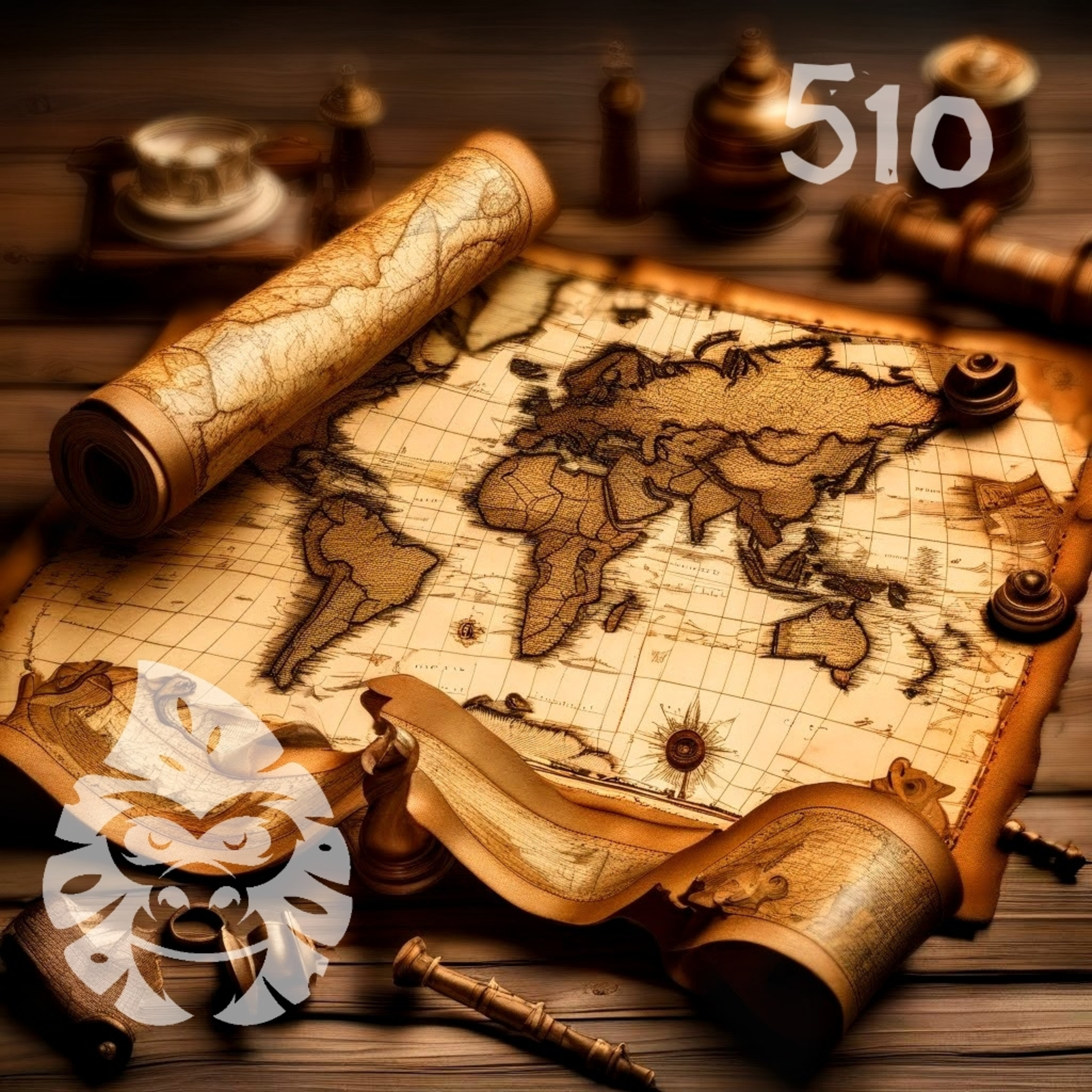
This week Kurt and Rocco look at the Piri Reis map, a map drawn in the 1500's that apparently shows Antarctica 300 years before it was discovered and without any ice. They then discuss some lost civilizations and what may have lead to their disappearance.
Contact the show at podcast@primitiveintelligence.com
Links:
- https://www.ancient-origins.net/antarctica-ancient-technology/piri-reis-map-evidence-ancient-technology-00276
- https://hazine.info/topkapiarchiveandlibrary/
- https://en.wikipedia.org/wiki/Piri_Reis_map#/media/File:Piri_Reis_Map_Translated.svg
- https://en.wikipedia.org/wiki/Terra_Australis
- https://www.amazon.com/Lost-Civilizations-Enigmatic-Disappearance-Ancient-ebook/dp/B08XZQ9XWZ/ref=sr_1_2?crid=2BF5CY5E0UL2B&keywords=lost+civilizations&qid=1697586063&refinements=p_n_feature_twenty_browse-bin%3A13054657011&rnid=13054642011&s=books&sprefix=lost+civilizations%2Caps%2C215&sr=1-2
Music:
Track: "Cage", Shryne
Music provided by https://Slip.stream
Free Download/Stream: https://get.slip.stream/jFva3A
Read the transcript
You are listening to the
Primitive Intelligence podcast
episode of 5-10 Ancient
Civilizations in Ancient Maps.
That's a working title.
I just came up with that off the
top of my head because that's
what we're going to talk about.
I had had to throw out that
whole bunch of.
We'll talk about that in the
beginning of the episode.
But the all the research that I
was doing that I had to throw
away, which sucked.
And yeah, and you're still
working on your, your story,
your, your segment and which I'm
excited to hear about.
But we're going to, we're going
to let that go one more week,
let you get that all together
and then we're going to jump
into this one that is absolutely
thrown together.
I've been reading and doing
research as we were getting the
stream ready because I was
completely unprepared because of
having threw out all my research
for two weeks.
But it works out.
So without any further ado,
episode 510 of the Perm of
Intelligence podcast starts.
That's it.
There we go.
So we were talking earlier.
I'm a little bit disheartened
right now because I spent, what,
two or three weeks?
Not straight, but two or three
weeks of research.
Today I just threw right in the
garbage.
That's unfortunate, isn't it?
It sucks because that's a lot of
time and it it was shaping up to
be really interesting and
without getting too much into
it, because I I really don't
want to give.
I don't I don't want to give any
additional power to whatever the
hell was going on with this.
But I was approached by someone
for an interview, and as I tend
to do, I I go through my
research and I researched the
information I was given.
I start to research the person
and I start to research parts of
the story and it led me down a
very, very dark path.
No, the the story is kind of
well, I guess the story itself
isn't all that light hearted,
but it's kind of wrapped in a
light hearted shell.
But the source of the
information is a very dark,
disturbingly dark source.
And I I I couldn't very well do
the interview with this person
and not bring this up.
And I don't want to attack
anybody.
I mean, we got to think about
what we want the podcast to be.
I want it to be entertainment.
I don't want it to be you know
we're we're going to cover dark
topics at some point that are
maybe not that dark but you know
I but.
You have to go with your gut.
If it's not feeling right and it
just feels too happy, then yeah,
you know, I mean you know the
part of the story behind what I
was looking into.
And I mean we've we've talked
about other things where it's
like initiation people are being
initiated into something and
that's that's what this seems
like, like they're the the
sources information is trying to
initiate people into.
I don't know, maybe a cult of
some kind, but belief system
that in in ideals and actions
that just I don't want any part
with.
I don't I don't want anything to
do with it whatsoever.
So I just tossed it right in the
garbage.
It happens, but the older I get
the and I told you I used to
listen to a lot of different
music and then I found that at
night sometimes I'd be dreaming
and some of the music would come
through and.
And I've so it's just weird.
The older I get the more I
realize that what you what you
consume it, it, it's there.
It's a part.
It starts to become a part of
you and you you really need to
be aware, everyone does of of
what's in your surroundings,
what you're engaging with.
You know what?
You're what you're consuming,
whether it's entertainment or
whatever it is, and because
it'll.
It it'll stick around for a
while, you know, even if it's
just rattling in your head or or
in your dreams.
Yeah.
And I I don't want to, I don't
want to put that in anyone's
head, you know, it's it it was
it was dark.
I I went back and forth in this
for about, I don't know, three
days on what I wanted to do.
And I was kind of in my head
going through how to approach,
even if I if I if we had gone
through with it, you know, I
would have had to be up front
before we even started anything
with this person and said, look,
this is this is where my
research led me.
And if you're not comfortable
talking about this, then we just
won't.
But the more I listen to other
things that this person has
spoken on other podcasts and
other things like that, that
it's just kind of glossed over.
And I it's just like I couldn't
do that.
And I don't.
Like said, I don't want to be
antagonistic.
I don't want to has someone on
that feels like to being
attacked.
So yeah, I just figured the best
thing was that I kind of ran it
by you earlier like hey look
this is what I'm thinking of
doing.
But you you just basically
reinforced what I was already
thinking.
It didn't feel right and
shouldn't do it.
Lot of lot of lot in life has to
do with how you feel, what your
guts telling you.
Got to go with it.
Got to trust yourself.
Yes.
So instead of that, I I was
hoping to do your thing this
week, but you're you're still
getting everything together and
I'd rather you have have it
coherent and we'll just use that
for what we were going to not
coherent, but cohesive.
You're rarely coherent, but
yeah, I'd rather you have that
together.
We'll do that in in place of
what I was going to do and this
week we'll do something lighter
like the demise of
civilizations.
How much fun is that?
Are we talking the apocalypse or
just, you know, the end of
civilization?
Well, not not our civilization,
but civilizations.
OK, so last week I was out
hiking with with Dragon and Matt
and Shadow and Shadow and I were
talking about just about the
podcast, about some of the
things that we talked about and
different points of view and
things like things like that.
And he he turns around good.
For those who don't know, those
are are Some of those are hiking
names.
One of those is a hiking name.
Yeah.
Well, and so, yeah, that's one
of those.
Yeah.
So yeah, nicknames, nicknames.
But Shadow turns around, he
goes.
What about these maps that these
ancient maps that show
Antarctica?
And I was gonna, I was planning
on doing something bigger with
this and I was like, well, you,
you bring me some maps and I
will get you on a podcast.
We'll talk about it.
But I started looking into it
and it wouldn't be worth doing a
whole thing about it.
But do you know what I'm talking
about?
The I I don't I I don't know
where you're going with it.
But I will say that what what
has intrigued me are how some of
the very, very old maps.
Show Antarctica and then some
more recent maps.
We didn't see it, so it's It
seems as though at least I and I
can't.
I don't know the maps I'm
talking to.
I'm referring about but did they
show Antarctica?
Well, and that's that's what you
don't know, because a lot of map
makers would rely on previous
maps.
So who's to say where things
actually evolved from?
I'm just say I've got, I've got
the information right here.
Oh, good.
Is it on the Internet?
It's a Well, it is actually.
So the the map I'm talking about
is the Piri Reis map.
OK, this was uncovered in 1929
in Istanbul at the top Capi
Palace.
I probably murdered that.
The map was drawn and signed by
Turkish cartographer Piri Reis
and is dated back to 15/13/80,
so pretty old now.
He was an Admiral in the Turkish
Navy.
He was an experienced sailor
cartographer and he claimed to
have used 20 different sources
to make this map, including
eight Tomic maps, 4 Portuguese
maps, an art, an Arctic Arabic
map, and a map from Christopher
Columbus.
Now the map was interesting in a
in a lot of ways because it
didn't use what it wasn't a map
like we would picture a map with
latitude and longitude.
Those those measurements, those
guidelines hadn't been invented
yet.
So it used these that you think
of old maps, you see like these
these like almost like a
rosebuds with lines coming off
them.
OK.
They depicted like wind
currents.
I think they're called like wind
lines or something like that.
And that's what this used.
It appears to show Antarctica on
it.
You know, it shows Africa.
And then South of Africa there's
landmass.
And then there's also the the
coast of South America as well.
But Antarctica hadn't been
discovered yet.
It wouldn't be discovered for
another 300 years after the
drawing of this map, and it
would have it appears to have
shown Antarctica without its
ice, which would be 6000 years
before that.
So when it was found, people
were like this clearly shows
Antarctica, like you can see it,
it shows Antarctica.
People started to research it
and see what they could find.
And there were other ancient
maps that showed a land mass at
the southern pole.
This is not.
It was nothing new.
But this clearly seemed to show
a coastline, islands, and
information.
So in 1929, a professor from the
University of New Hampshire,
Charles Hapgood, him and his
team is like a like his
students, they research this map
and he noticed this map uses
what's called mercatorial
projection.
And this is how we get like our
modern day maps where you take a
globe and you open it up to a
cylinder and you create your
your map and then you open it
up.
OK, right Now, mercatorial
projection didn't really come
about for another 50 years after
this map was made.
But they realized that there
were ancient Greek maps that
used a similar process.
It wasn't as accurate what it
had done been done by the
Greeks.
So it LED a it lended a lot of
credence to the fact that this
map was really was what they
what it said it was and when it
was from.
But now the article I read on
this really kind of jumped
because at some point this
professor somehow comes to
conclusion that the data sets
that the superior Reese used,
we're 4000 years old.
Like there's no, there's no line
to get to that that jump.
Just as like his team looked at
it 4000 year old data.
But what this would imply is
that the map sources and the
data points that he used were
created by a civilization that
predates everything that we know
and was able to do highly
detailed aerial mapping.
Because, like, this guy's like,
oh, the interiors are mapped
too.
Clearly this had to be done from
from the air.
They had to be able to map a
globe.
They had to have all this
technology.
Yeah.
So where where are those maps,
if anything, if that actually
existed And and you know, if
that happened, was there just
one guy?
There was one map laying around
and this guy and Perry Reeves
goes, hey, I could use this.
Like where?
Unless burned in a library at
Alexandria, but that's that's
possible.
But he Piri Reis never said he
used the stuff he used maps
from, which is is interesting
for that time period.
And I mean so his Muslim name is
here too.
I didn't even attempt to try to
pronounce it because I would
have not done it justice.
But a lot of Muslim
cartographers did not go outside
to find sources.
So this map is unique from that
standpoint that he was not
afraid to go and get ancient
Greek maps and you know, a map
from Columbus and all these
other sources to build this map.
He was he wanted to make the
most accurate map regardless of
where the data came from.
But there's there's some
interesting things about the map
that show that like like
sections, they translated the
text on it and some of the spots
are like this area is is, you
know, very cold and rugged.
The Portuguese infidels would
not go there, you know, like
things like that.
So like the he used that a
different time.
Yeah, he wasn't happy.
Different time, different
language, yeah.
But yeah, so this started to
lead to speculation that it was
a a super civilization that
predates everything and people
jump to Atlantis or ancient
aliens.
And this is from this professor.
This is New Hampshire professor
in a book he wrote stirs all
this up.
But there's a much more common
sense explanation for this map
and it did not take me long to
find information and go, oh,
here's what's going on.
Now I'm not, you know, a Rhodes
Scholar or anything like that,
but looking at the information
that other people have obviously
gone out and found and looking
at it and going, oh, this makes
more sense.
So there's some interesting
things about the map.
Like I said, there was sections
of the map that have been
translated and it said, you
know, it described the areas of
the map, but it also showed
images of monsters alongside
common animals.
So just like there's one where
it's like this, this dude with
no head, like where where his
neck would be.
It just goes straight across and
it looks like it's on fire, but
his torso is a face and he's
holding flowers, but there's a
monkey sitting next to him.
Like like what there's like.
References possibly.
Be I have no idea.
Yeah, but then there's there's
references to like 1 horned
mountain goats like unicorns,
long haired, white long haired
ape like creatures on this
continent.
Sasquatch.
I mean where?
So where do we think they might
have been talking about?
Do we have any?
I I think it was legend that the
local people were telling him
that was probably mistranslated
and then it was written down,
and then 500 years later
somebody else translated it in
English and it just doesn't make
sense.
It has no bearing on the map.
It's just it's just interesting
that it was on there.
The other interesting thing is
that the area showing the
Caribbean, especially Cuba, was
misaligned badly.
And there's there is evidence
that some of Christopher
Columbus's maps of the Caribbean
were aligned this way because
when he sailed to the Caribbean,
he thought he had made it all
the way back around to Japan.
He was not expecting to run into
North America.
He thought he had gone across
the ocean and he was coming back
to the east.
So he has like Cuba.
And when you look at a map of
Japan and Cuba, it's almost
identically orientated.
So it's like he thought he was
in Japan approaching Japan,
wrote, you know, drew out the
map and then Piri Reis copied
that map and put it in there.
But with that kind of omission
or a mistake put into the map,
what other mistakes could
possibly be made?
Because the way this map is laid
out, Antarctica would have to be
connected to South America by a
land bridge, because it's a a
consistent coastline down South
America and then around South of
Africa.
There's no ocean there, there's
no Strait of Magellan.
It's just all land.
Which to me would say he never
actually went to any of these
places.
He was just piercing maps
together.
And somebody at some point
sailed so far South and went,
oh, this must connect, or got
turned around and thought the
coastline connected, or just
kept going.
And since no one had gone down
there to see this continent at
the South Pole, just assumed it
must connect.
Ancient maps like in antiquity
used to show a landmass at the
South Pole.
It was called Terror Australis,
the southern land.
And this is where people see the
Puri Reese map.
And then they see these old maps
from Antiquity and they see this
landmass down there.
And they say Antarctica was
there, it had no ice.
This must be true.
The problem is terror.
Australis was only ever
hypothesized.
It was rumored, it was written
about and it was mapped without
ever being witnessed.
And the reason why they assumed
it was there was to
counterbalance the mass of the
land to the north.
That is the only reason they
thought there was land at the
South Pole.
They've never been there.
There was no no legend of it.
They just said, well, there's
this much land mass in the
northern hemisphere.
There must be this much in the
southern hemisphere.
So all these old maps from from
antiquity show completely
different sizes and shapes of
landmass down there.
Now ultimately they were right.
There is a continent on the
South Pole, but it's not this
Terror Australis, it's
Antarctica under, you know,
miles of ice.
So I think these maps for
antiquity, these other maps that
were, you know, this guy used,
showed this terror Australis.
He just connected the dots.
Then we've already got the
Caribbean that is completely
wrong because it's, you know,
orientated like like Japan would
be.
So how how could he?
Why would that not be the case
with the with the South Pole?
So it, I don't think it shows
the continent to the South, I
don't think shows Terror
Australis.
It just shows what people
thought should be there.
And maybe that's why that map
never really made it.
You know, it was hidden for
centuries because it was wrong.
You know, this isn't the
matricing on the wall.
To just to think about and and
again, if we're talking about
map makers, we're talking about,
you know, a profession unto
itself at the time.
But like as you said, it's
doubtful that they were actually
traveling.
They were making maps and they
must have been using resources.
So it makes you wonder what they
relied on and how they gathered
their information.
It's it's it.
To me it's it's kind of
fascinating because you're
talking about gathering or
creating a a a a network of
information and basing that on
what you're doing without
anything that we have today.
You're talking about word of
mouth.
You know, stories from sailors,
maps from people who were
adventuring.
That's all there was.
So you'd have to be gathering
this information and going to
possibly other libraries or
scholars and just trying to
piece it all together exactly.
But I mean regardless, they were
incredibly accurate maps, even
though they were wrong in some
instances.
The mapping of the time was
incredibly accurate.
I mean, the scale may have been
off and some of the orientations
of places may have been off.
But considering they didn't have
the technology that we have
today and they were relying on
basically navigating by the
stars and like they didn't even
have, I don't think they had
sextants really.
You know, I'm not sure what they
use.
They just traveled, you know,
they used the stars.
Imagine telling someone today,
here's a here's a stick a string
in a boat, go find me a
continent.
Oh, and it's a wooden boat that
relies on on wind, so here's a
couple.
Of gold pieces and an orange.
Have fun.
I got I'd like to I I I would I
would really like to a visual of
what it was like thousands of
years ago without any light
pollution in the middle of an
ocean on a clear sky like what
could you I mean just the amount
that you probably could have
seen it would have been would
have been fast and like it it
once your eyes adjust it could
have been adjust from what
there's there's no.
Light, like, not cell phones
though, But yeah, Imagine that
though, and what you're looking
at, you're not just navigating
by Points of Light.
People think like, oh, you're
going to navigate by a handful
of stars.
I mean, you've seen dark skies.
When we were in in Acadia, you
saw what that sky was like, and
that was nothing compared to
what they could see.
So it was like looking at a
forest.
It was probably much easier to
Navi to look up and be like, oh,
this is you could see the actual
strands of the Milky Way and
they could immediately look at
it and recognize how it was
orientated, where they were and
where they needed to go.
So yeah, I mean it's it's
incredible, but it it makes
sense like I couldn't do that.
I I know that.
I mean, I'm pretty good in the
outdoors, but I couldn't do
that.
And there was.
I'm going to, I'm going to run
my mouth for a little bit here
because I don't remember the
specifics, but I do recall
seeing a program about Native
Americans.
I I don't know if it was on the
American side or the Canadian
side, but how They had stories
and some of their their art I
believe was found in Hawaii, if
I recall correctly, and there
were stories about how they
would.
They launched their boats and
we're talking about, you know,
we're not talking about massive
vessels with sails.
They would launch their boats
and they would, they would
follow these birds that would
fly and then they would sleep on
the water.
So they would just continue also
just they would just follow
these birds and and wrap your
head around that where you're
just leaving one day and you're
like, OK, we're going to go
follow the birds and see where
they go.
You hear the geese take off and
you're like, at the boat.
Let's go.
Right.
Well let's go see what's out
there and and eventually people
find a way like it.
It's impossible for us to to
fathom doing something like
that.
Some people can't get to the
supermarket without GPS today
and and and these people were
just jumping in the water and
and again you have no concept of
weather.
Or what would happen?
You're just out.
You're once you leave, you're
out and you don't know for how
long.
It's not like like today if you
go, you know, you go, you're
going to, you know to a couple
states away.
Or even if you're getting on the
boat and you're going to another
country, you know how long it
takes.
You know where it is.
They didn't know where.
They didn't know if there was
anything.
They were just going.
So they may have just that.
Either they're either incredibly
courageous or life for them
sucked so bad they're like I'd
rather fall off the face of the
earth and stay here.
They just went like or a
combination of the two.
It's it's it's a it's a thing.
People were different.
It was just so different back
then, and to think that you were
still able to gather that
knowledge and pass it down.
And eventually it would become
part of a culture and then get
passed along.
It's it's fascinating like
today, like the things people
worry about and talk about and
most people don't.
Even if you think about the
concept of, like you said,
you're just going to get in the
car and go, that's a road.
That road's already there.
Oh, you might hit a dirt Rd. if
you're taking a short Rd.
Something.
It's still a road.
Somebody's already been there.
I've had the conversation with
people about being in the woods,
especially if it's old woods.
It's something that, you know,
that hasn't been logged a long
time.
There are trees everywhere.
So if you think about even those
those people who are trying to,
you know, literally blaze a
path, they're just walking over
down trees and through swamps.
And over mountains and they're
just walking.
They're just, they're out there
doing it.
And it's it's just, it's amazing
to me that we as a as, as a as a
as a global culture kind of kind
of got ourselves a little
pattern here where we know we
have a routine and we're not
worried about that because we
don't have to worry about it.
Well that's that's the nature of
humans though.
We we like our patterns.
We like our routines.
But with what you're talking
about there, I mean I I think
back to and I should probably do
an episode on this.
But the, you know, I spent a lot
of time researching my great
grandfather, my great, great
grandfather on my on my father's
side.
And he came over from Germany in
the 1850s as a, as a young
missionary, went straight to
Texas, got off the boat.
And they're just like go that
way, find Germans and preach to
him.
And there's like him and six
other ministers that just walked
through like 1800s Texas
wilderness until they found
congregations they didn't know.
And there's actually a quote
from him in one of those books
where he's like, I'm, I'm not an
adventurer.
I'm not a Walker.
This isn't for me, it was just
funny because I, I, I go
backpacking all the time.
But like, that wasn't for him.
He didn't want to do that, but
it was his job and he went and
did it and they they found their
way.
I mean, yeah, there was already
people there, but there wasn't
roads and cities like we have
now.
Like they built that stuff by
hand as they were going and.
They found a way.
And they found a way, yeah.
But this this map led me to an
interesting question, though.
What if it turned out that that
really was Antarctica?
Like who?
Who could have who could have
made that?
And, you know, and we've we've
spoken about the possibility
that modern humans aren't the
first evolution of advanced
humans.
You know, there's so much
history.
There's the Earth has been
around for so long that I I
refuse to just disbelieve the
idea that maybe not Homo sapien
but maybe another branch of of
humanity came before us and
we're advanced enough to get to
where we are, maybe even
further.
And then, you know, catastrophe
happened or they left or
something happened and it starts
over.
And then this just because
there's so many stories, so many
ancient stories about cycles
and, you know, like mass
extinctions and this, you know,
the 7th world or the, you know,
the 5th evolution or whatever.
Like, I'm not not quoting any of
those, but, you know, there's
always these stories where there
were just another iteration,
like it's it's happened before.
It's it's going to happen again.
And it led me to a book about
lost civilizations.
And it's actually called lost
Civilization.
The enigmatic disappearance of
ancient civilization.
That still mystify.
And this is by Conrad Bauer.
And I'm still about 90% of the
way through.
But I I pulled a few of the
civilizations that he talks
about and they're pretty
interesting because I know I
know you're going to talk about
an ancient civilization next
week and I figured this would be
a kind of a neat tie in.
I'm not going to touch on on
your guys.
But the first group he talks
about, and I don't think I've
ever heard anybody talk about
this when they're talking about
lost civilizations, the
Neanderthals.
Oh, interesting.
And it is interesting because I
never really like What do you
know about Neanderthals?
Well, I know the the known
evidence continues to to or or.
Let's just say the theories
continue to evolve and it sounds
as though they were possibly
smarter than us and and they.
It looks as though humans have
some Neanderthal DNA.
So they were close enough to us
that they were intermingling.
Yes, they they predate Homo
sapien by a lot.
Like they they survived the last
Ice Age like they were around.
They came out of the ice, you
know, literally.
They lived in the Ice Age,
mostly.
Most people consider them to be
just Cavemen, you know, living
in a cave, beating something
overhead with a stick and then
dragging it in and eating it.
But they were actually far more
advanced than this.
They not like they didn't build
houses, but they did.
They were able to fashion
clothes, they could fashion
tools, They had mastery of fire.
It doesn't appear as though they
used fire to cook, which is
interesting.
They just used it for heat and
they did exist alongside Homo
sapiens.
So we came like in the last
40,000 years of Neanderthal is
when Homo sapien appeared and
lived side by side in the same
regions, started to intermingle.
2 to 5% of modern human DNA is
Neanderthal.
And that's that's pretty that's
pretty common.
It's not like some people have
it and some people don't.
Pretty much everybody has 2 to
5% of Neanderthal DNA.
So where this guy kind of leads
is you.
Did they die out from something
because they were hunter
gatherers?
They they weren't farmers.
They weren't, you know, they
didn't appear to have the
forethought to store food.
They went out, They found what
they could find.
They haunted what they could
hunt.
They lived meal to meal, whereas
Homo sapiens were.
We would actually store food.
We would raise animals for your
future use.
Was it?
Did they just die off because
they didn't have enough food?
The climate was changing their
their source of food went away.
Or are we still here?
Is modern human?
Is Homo sapien just a
combination of the our initial
offshoot, our initial ancestors,
and Neanderthal, and they
combined and they basically bred
out of existence, but they're
still in existence because they
lived through us.
So did they actually ever go
anywhere?
That's an interesting theory.
I mean clearly it what clearly
they survived to a certain
extent because their DNA
survives.
So, so, so technically.
They did there.
It's interesting to me because
we everything we know it's it's
that's really all it is.
It's what we know so far.
So I I think it would be
completely plausible that if
different tribes got together
and intermingled and then it's
just the genetics that survived.
Or what we consider current
human Yeah, now there's I don't
have the the information in
front of me but over the past
month or so there's been two
discoveries that are fairly
interesting and the one is that
they found I can't remember that
it's Homo habilis.
Maybe it's a a a offshoot of one
of the early human ancestors
that were thought to have no use
of tools, basically just living
at the base of a tree or in a
branch.
They found that they've they
created structures.
They used wood to create
structures so they could land
and build.
When you get cold, what do you
do when you, you know, they look
at, oh, well, they the way they
determine the intelligence of
these animals or these creatures
or these early humans is by the
size of their brain cavity.
And they go, well, there's no
way that they could have been
smart enough to make a house.
But it turns out that they were.
And then there's another
offshoot, and I think earlier
than that, where again, they
were just, they were primitive.
They lived off a instinct.
They didn't know anything.
And then they find caves where
they lived.
And there's bones of this, and I
don't remember which branch of
humanity it was, but they find
their their bones in this cave
and on The Cave walls they find
art not drawn by modern humans.
And they're just like is.
That the painted cave in France,
May it might have been in
France, yeah.
Yeah, it doesn't surprise.
But it's in the yeah, This is
why this This is why I when you,
when you even myself, I catch
myself doing it.
But when you hear people talk.
It's almost as if we can
convince ourselves that it's
fact.
It's like, well, it's only what
we know.
Like, you know, we're we're
woolly mammoths haunted by man.
Well, yeah, we well, there's
evidence.
We think we have evidence, but
we don't really know other than,
oh, we saw some cut marks of the
bone, so they must have been
haunted.
But we don't know.
You don't.
We're just guessing.
It's all just scientific
guesses.
It's like we have no idea what
actually was there, and the only
thing we really know are the
massive megalithic structures,
because we could see them and we
could analyze them.
Yeah, but other than that.
But we don't understand.
Guesswork.
No, we don't understand.
We don't understand how they
were made.
We we don't understand why they
were made, if there was more to
them.
And like you said, there's
there's, it's what we know so
far.
But we only know a small amount
of what is available to us now
from the past and think about
how much is lost that will never
be all defined.
Yeah, you know it it's amazing.
And to think that, Oh yeah well
we're we're, it's we could be
the only ones that were smart
enough to figure this out.
Well, are we like we're seeing
other branches of human, we're
finding the evidence now that
they were they, they were
intelligent more, way more
intelligent than anybody ever
gave them credit for.
So what makes us so smart?
Well, and that's what's weird,
is it's all about again, where
for me, I'll get back on it,
where it's how people live and
it's the thought processes that
go into that life.
And I've gone through a few
rabbit holes lately.
On mostly on YouTube where
people seem to be confused about
even some of the buildings in
America and how they were able
to have been built like these
old buildings made out of stone
big structures, but we're
talking current day structures.
But people believe that we
couldn't do this because it's
not in our.
It's not in our concept of
reality where if you had to
build something, if you had to
get something done, eventually
you could figure it out it.
I mean, you know, all things
being realistic, I I also just
saw a video of a girl who
doesn't understand how you can
breathe in the car because the
doors are closed.
So I don't have a lot of faith
in what people see as a building
and can't figure out how to make
it.
Right, but it's.
It's and and our concept of time
is I think different from from
people in the past.
Like if you look at something
like Machu Picchu where these
massive or any any of these
other medical ethic structures
where there's massive
foundations that are carved and
stacked, we don't know how long
that was actually going on.
We don't even know how long.
It would take to do that we'd
know once ever, as far as I
know, really tried to replicate
it to see it.
I don't think so.
No, right.
So, so could we really do that
And and if you think about in,
in this, in this context like if
if you and I like if one of us
was going to be able to build a
house on our own, if we were in
the wilderness you wanted to
buy, you wanted to build a a
cabin or stone house, you could
do it to a certain extent.
And then 100 years from now,
someone could come across the
foundation.
They're going to have absolutely
no idea who we were.
And and it's it's something, you
know, a a whole civilization
could disappear for one reason
or another and we would really
have no idea.
But we we don't, right?
Yeah, yeah.
I mean there's.
That's kind of the point of this
book I was reading, right?
You don't know.
We really have no idea.
In in civilizations that we're
much closer to where we are now.
The the next one that he talked
about, well, I skipped a a few,
but next one I, I, I kind of
touched on was Easter Island.
Oh, that's a good one.
Yeah, so Easter Island, if you,
if you don't know, is a fairly
small island.
But it's in a very odd place.
It's like over 2200 miles from
the West Coast of South America,
and it's 1100 miles from its
closest island neighbor.
It is remote.
I did learn that the original
name for Easter Island is Tepito
Tejunas.
No, I'm sorry, Tepito Tejuna.
And it means navel of the world.
Oh, that's cool.
Nobody knows why it's was called
that.
They don't know.
They just go that it's the navel
of the world and but they don't
know why.
Legend says that the original
inhabitants are at least
original to what we know.
Inhabitants of the island came
there because their home island
sank and they're not talking
about the immediately says.
I'm not talking about Atlantis,
but there was another island
nearby.
Where like the rising waters or
yeah, priests destroyed it.
The the priest came in and was
like get your shit, we gotta go.
And they just left.
They just got what they could
and they left and they wound up
on Easter Island.
The good what I think, what I
think is interesting to me
because I'm basing this on my
knowledge and as a kid growing
up, there was a lot of weird TV
shows and things.
Yeah, and.
And you always heard about
Easter Island and you always saw
the heads and everything.
I knew all the way up until
basically right now, as far as
I'm concerned, everyone thought
they were they were just heads
to a certain extent.
And now they've been excavating
them and there's a whole body.
There's whole bodies, yeah,
everything.
That whole bodies.
Everything I knew about Easter
Island up until I watched
departures was from Bugs Bunny.
I don't remember Bucks Bunny and
you don't.
Remember, that's where the
Easter Bunny lived.
It was Easter Island.
It got its name Easter Island,
because it was discovered on on
Easter Sunday.
But I what what I think though,
like where I was going with
that, is if you think about, and
I guess here's a question for
everybody, should, should,
should, should contemplate this.
How fast does it take for an
inch of soil to accumulate with
no intervention, just by wind
and normal course of action,
right.
So if you're talking about a
stone, a massive stone
sculpture, and over half of it
gets buried in soil, but not
just the statue, everything
around it, there's soil
everywhere.
So how much time could possibly
have passed for that to happen?
Unless they were buried
intentionally up to the next.
Yeah, that's interesting.
I mean they they carved them and
walked them across the island
by.
Why would they not be capable of
burying them?
Well, no, I always just assume
that if you were going to do
that, then you would probably
want them to.
Like if if it was the point of
it was to walk, then you
wouldn't want to bury them
because that's they're supposed
to walk.
Well.
Well, so here's a as a as a
spiritual practice.
Well, there's there's not a
clear idea of what they actually
represent.
So what the the statues, the the
MO Moai was that it's pronounced
MO right Moai moai.
So they're carved from stone
that came from a volcanic crater
on the island, and the legend
says, like you said, that they
walked across the island.
Right.
Their their idea was they they
they walk across, they they
wander across island, they walk.
That's how they got to their
locations.
The interesting thing is, is
when people say that they're
they're put near the shore as
guardians.
The weird thing is is that
they're not facing the water.
They're not looking out for
danger coming in, they're facing
inward, towards the island,
maybe towards the volcano.
Some of them have hats, some of
them don't.
And yeah, they were they they
find them buried.
Now, it takes a long time for
soil to build up, but if you're
on an island, that soil could
have been deposited by a tidal
wave.
We're talking massive stones.
They wouldn't most likely have
gotten washed away.
Or there could have been a
volcano.
There could have been a lot of
things that buried them, or
they're buried intentionally,
but The Walking part they
figured out.
They did walk across the island,
and I saw this years ago.
I saw a documentary on it, and
this guy touches on it in the
book.
So as the American team goes to
Easter Island, because they're
like, we got to figure this out,
They started finding the buried
ones.
And they can't figure out why
they're buried, and they can't
figure out why they're not
facing the water.
They're facing away from it.
And they can't figure out how
they got from this quarry in
this volcano, like miles away.
To where they are, because
they're massive.
They're like 16 feet tall.
They're huge.
So they start looking at it and
they're thinking different ways.
And maybe they rolled them, but
the they may have.
But the island's been
deforested.
There's no, which is another
weird thing when you think about
how they're buried.
Deforestation creates soil
erosion, not soil accumulation.
So it's just another weird part
of this of this mystery.
But they found out that the way
that they're, the way they're
they're cut in their lefts when
they're standing and in place is
different than when they're cut
and laying down.
So they found that around the
head when they're laying down,
there's grooves and they're able
to put ropes around in through
those grooves and get four
people standing up, four or six
people standing around it.
And rock it and the way the
bottoms are curved, they
actually start to do this.
They rock back and forth and
they walk.
They were actually able this,
this team was of like six or
eight people was able to walk
one of these old statues an an
actual like moai.
They were like the island was
like go ahead, we want to see
how this is done.
They got permission.
They stood one up and they
walked it and they went.
This could easily be done for
miles.
Because the way they're
balanced, you got enough people,
you could actually keep it up,
right?
And even if it fell over, it's
not going to break.
You just got to stand it back
up.
So they actually walk them
across, but they still don't
know what.
Like if if those are your
ancestors that are protecting
you, why are they facing you?
Why they have their back to any
potential danger?
It's a good question.
Really bizarre.
And then?
Like only the ones they think,
the only the ones that have,
like the Redstone on the head,
Like the hat are the actual
ancestors that would be
protecting or would be
worshipped.
And the rest of them are
depicting something completely
different, but they they don't
know what that could possibly
be.
When Europeans finally found
Easter Island, there was
thousands of Islanders there.
There was quite a few.
They came back years later and
the numbers had dwindled and
they didn't know why, other than
there appeared to have been a
civil war between tribes of what
they were.
They were calling themselves the
Short Ears and the Long Ears.
And now, I mean, there's not
many people that live on the
Easter Island now.
There's more people there now
because more people are visiting
it, but even when.
See, there's evidence that even
when their society was much
bigger in starting to go into
decline, Instead of finding ways
to reforest the island, instead
of finding ways to make food or
better shelter, they focused on
those statues.
They just kept building them.
And by ignoring everything else,
their civilization started to
decline.
At least that's what what they
think.
But what?
What is so important about these
things that you would like your
civilization?
Well, I guess maybe they're the
ancient day equivalent of cell
phones because everything's
crumbling and you know, in our
society and everybody just wants
their freaking phone in their
hand.
And and I can understand if it
has a spiritual significance,
if, if there's a people that are
very, very spiritual or
religious, yeah, they would.
They would focus on this, but
there had to be some people at
one point who said, you know,
hey, there's no trees.
We better think about what's
going to happen when there's no
more trees but you all.
But it all comes out of the same
thing.
It's like who you are as a
person versus the collective.
So you you could be a free
thinker, you could think what
you want, you could even go try
to reforest it.
But if the majority needs that
lump, that timber to do whatever
they're whatever they're doing,
you're not going to win.
There, I don't think there's any
real evidence of the timber
being used.
It's not like there's
structures, well, well and and
and I guess if you're, I don't
know the size of the Easter
Island, right?
And I agree if if, if it's not.
I think at one point I saw a
theory that they were talking
about using the timber for
rollers and they were rolling
the statues.
Yeah, but now that appears
that's not the case.
But it's it's the same thing
here in America where, you know,
if we need timber for houses or
for fires, we're going to go out
and get it.
You know, there are people who
if you live on land, it's your
land.
You're going to try to maintain
that because you want it to
last.
But if you're not actually
living in that spot and you're
just going to go take it, people
have different, you know,
different thoughts on on the
need and and what's right.
It's not big.
And I yeah, I didn't think it
was very big.
It's 14 miles by 7 miles, 63
square miles.
It's not not a huge island but
it's the same thing if you if
you think about let's say
Scotland, if you and everyone
has ideas about well maybe not
everybody but if you if you try
to visualize it you can you can
picture the island you're not
picturing a forest and when as
far as as far as my knowledge
can take me it's it's my
understanding that eventually
when we started to be we were
starting to do animal husbandry
and and have animals you would
need the room to graze.
And animals that graze eat
everything.
And more trees went and more
trees went until eventually it
looks like it is today, and now
there are people who are trying
to reforest it.
Yeah, but they.
So if they deforested the
majority of the British Isles,
they didn't disappear, right?
That's true.
So what?
What was different with Easter
Island, I don't know.
I mean it's, I see that the
point you're making, but it's
it's happened in other instances
and it wasn't the end of their
civilization.
So I wonder what the tipping
point was.
The long the long ears versus
the short ears, Yeah.
Like, was it?
Did they just, were they so
fascinated with these making
these idols that they starved
themselves to death?
Yeah.
Did they just stop trying to
grow food?
And you're like all the trees
are gone.
We'll just make some food and
then, oh, we don't have any
food.
Well, let's keep making.
You know they'll save us.
It's keep making them make
enough of them.
They'll save us.
I don't know the the humans do
like to believe that someone's
going to come and save.
Them they, they really do.
And now this one's a little bit
closer to what I know you're
working on the the last two, but
the Anasazi and.
Do you know what the meaning of
the word Anastasia is?
I knew it at one time.
I can't remember it right now.
Ancient aliens?
No it isn't.
I swear to God, it translates to
ancient alien.
Yeah, Now they don't know that
that's that means ancient, like
space aliens.
But maybe they came from
somewhere else.
They're like the old ones that
came from another place.
It's more likely what it means
than like star people, but.
Yeah, so it means ancient
aliens.
And the weird thing about the
Anasazi, they were not a
civilization in decline.
From all accounts, all research,
they were in their prime.
They were extremely defensive or
offensive defensive.
I guess they would build their
homes on Cliff sides in the
cliffs.
Their whole there was like, it
was like modern day apartment
buildings.
Like a lot of the the units they
made looked almost the same as
everyone else's.
They had a lot of the same
tools, a lot of the same
baskets.
Like everything was very like
this is how we're going to do
it.
And then they would, they'd go
to their their, their home up in
the Cliff, and they'd pull their
rope or their ladder up, and
then they were safe and they
could go about their lives they
built. 30 foot wide roads and I
didn't have a chance.
I was going to look into this
before we got on the on the
podcast, but you can see them
from Google Earth apparently.
And you can see them come like
they come up out of canyons onto
messes and up on top of
mountains.
And they didn't have cars or
vehicles, but they they're
assuming they used them to get
materials down to to build.
I'm not sure what else they
would use them for.
Like why would you make 30 foot
wide roads if you like, why
would if you didn't have a
vehicle of any kind 30 foot
wide?
I I I don't see a reason.
Well, I mean, I can't fathom a
reason unless you had traffic,
you know, unless it was a trade
route of some.
That's a lot of trade.
It it is if, if, but if you
think about how I mean I I I
guess it could be an organic
transition from a small path to
30 foot wide Rd. like I guess it
could do that and it just
evolved and get bigger over
time.
It it may have been like a a, a
show, like what do you call
that?
Like a look, Look at me.
Look what it look what we can
do.
You know now they did have a lot
of stone to get rid of because
they carved their homes out of
cliffsides.
So yeah, maybe they start out
with smaller paths and then as
they trade it with other groups,
they were kind of in awe or
maybe even slightly intimidated
by these stone pads they made.
So they just start making
grander and grander.
And it was like, you know, you
don't want to mess with us.
Look what we can do.
I don't know.
I don't be.
Yeah, I I don't know.
The interesting thing, though,
is the petroglyphs.
The petroglyphs show.
Not just possible, but a a very
strong understanding of
astronomy, down to the point
where they don't know exactly
what it's supposed to be, but it
looks a lot like the Milky Way
Galaxy.
Like they may have had an
understanding of like it's like
a spiral petroglyph that looks
like the the Milky Way.
There's also drawings of figures
that don't look human.
And This is why people think
that the alien part is, you
know, and This is why ancient
alien hypothesizers like to
think that they were just beamed
up and taken away.
But they weren't the only
advanced civilization like that
to just disappear.
The Mayans, it happened too.
They just, we don't know what
happened to them.
Like they had all their
everything was there and you're
just, they were gone.
Now there are.
They didn't completely disappear
though, because the modern day
Pueblo Indians.
Are their descendants and they
actually carry over some of
their traditions and their
practices, so that's that's
pretty cool.
But what happened to the rest of
them?
And why like would you just hop
on the roads and walk away like
what happened?
Well and and something like a a
desert society and again I I'm
just guessing but something
where if you figure the the
world continues to get warmer or
if there's a you know change in
the climate maybe there's less
food maybe people just move on.
You know, they they they maybe
they're nomadic, They just
decide to go somewhere else.
Nomads don't make 30 foot wide
roads and build houses and
cliffs.
But also I can, I can throw
water on that idea because that
so that's in the Four Corners
region of the United States.
That's a high desert.
But there are ample ponderosa
Pines and juniper trees that are
in the area, and through records
they can find that when the
Anasazi were there, it was a
very it was very conducive to
growing the environment was it
was not desert like at all.
It wasn't arid, it was very wet
and they would have ample food.
But if you're if you're a nomad,
you're not going to.
Carve your house into the side
of that Cliff.
No, but what I mean is that
maybe then it was, and then it
just got a little bit harder and
a little bit harder, and then
people decided to leave.
So maybe they turned, Maybe they
just decided to Some of them,
yeah.
But where would they?
Go It's not like they like they
were in the Four Corners region
and then they moved over a
couple 100 miles.
They just disappear.
That's the interesting part.
That's that's what's interesting
is people they people that,
that, that that'll that'll touch
on my story for next time.
So people won't dig any deeper.
OK yeah.
And then the last one, and I was
just reading about this right
before.
So my I got a little information
on them and this does you may
touch on these.
So let me know if you do.
But the Olmecs?
No, not Olmecs.
OK, so the Olmecs, do you know
what the what their name means?
No, Olmec means the rubber
people.
That's cool.
Now in their region, rubber
trees were abundant and they
traded rubber.
So the the Olmecs were very
interesting.
They created, they created stone
buildings, so didn't carve them
out.
They built stone structures.
They created aqueducts.
They had plumbing.
They also carved these giant
stone heads.
I know the head.
I know the stone heads, they're
cool, yeah, that are round and
they appear to be wearing some
kind of like a helmet and the
author just says, is it rubber?
Did they actually make like
rubber?
Because imagine back then if you
could make a rubber like hat
that would battle people like
that would make you like like oh
what is what is that material
like?
It's not skin.
It's not hide.
It's not wood.
What what is that?
So they got these, these
helmets.
Now before I even read the next
line, immediately in my head I
went, well this is very much
like Easter Island.
They carved these giant heads
and they line them up in the in
like a guardian pose and then
they vanished.
They also are famous for the
sculpture that they have that's
called Ancient Astronaut in a
spaceship, I think it's called.
And it looks like I, I I know
the the sculpture, but it looks
like this guy who's sitting down
kind of leaning over and he's
got his hands on like knobs and
levers and they don't know what
it means.
That could be nothing.
It could just be and this guy
makes the same point.
This could just be some kind of
like ritual and he's sitting at
a table and it's the way they
they sculpted it.
It looks like he's in a cockpit,
but he's just at like a table,
like moving jewels around or
something.
We we don't know, but it's.
A cool sculpture.
It's a cool sculpture, yeah.
But the the key to that is it's
not an alien.
It's not like some weird
creature.
It's clearly one of them sitting
at this thing.
So it's like, did they have some
kind of, I mean, they had
aqueducts, they built buildings,
right?
Did they have some kind of
gravity vehicle, like something
they could, you know, they need
to get stuff from, you know, up
the hill.
Did they just get on this little
cart and roll it down the hill
and that's what they're
depicting?
And he's got like levers to
control the speed, like it could
be anything.
But it could be anything.
These they weren't.
We would never know.
People.
People think it's a it's a
spaceship.
Well, when you want to see a
spaceship, you're going to see a
spaceship.
Right.
But it also could be, if you
think again from a spiritual
standpoint, could be somebody
interacting with the heaven, the
heavens, it could be or their
ancestors or the spiritual
realm.
You know, you you could
interpret anything if you really
focus on, Oh yeah, it could be
some kind of instrument like
musical instrument throwing
though Think of like like steel
drums, like the they sit out in
front of you like that.
And if they had something that
was like, so we've got ringing
rocks in Pennsylvania.
What if he's like hitting like
rocks with sticks to ring?
It could be, it could literally
be anything.
But if you're looking for, it's
confirmation bias.
If you're looking for ancient
aliens, you're gonna see that
you're.
Gonna find it.
And if you say it's a guy in a
cockpit flying a spaceship and
you look at it, you go, holy
crap, that's a guy in his
cockpit flying a spaceship.
And then you could also think of
a millionaire.
The things it could be.
But if you want to see an alien,
you're gonna see an alien.
But they just there's another
group that just disappeared,
isn't it?
The Olmecs?
No, we've mentioned this before
that we we listen to Mysterious
Universe.
Weren't they just talking about
the Olmecs and that some of
their writing is actually
Chinese?
Was that the Olmecs?
They were.
Talking I I I can't recall but I
know it was it was mentioned
recently.
Yeah, it was one of those, those
ancient civilizations and they
were like, oh, like a, a guy
from there was like a Chinese
guy, like scientist and they
were going to a museum for an
exhibit and they let him in
without paying.
And he's like, oh, I didn't pay.
And they're like, no, you're
you're one of us.
You're you're of Olmec descent.
And he's like, no, I'm not.
And they're like, yeah, they
are.
And they let him in and then
he's looking at one of their
like a tapestry or something.
And he was able to read what was
on it and it was like 1000 year
old tapestry.
And you're like, how could you
read that?
He's like, oh, it's Chinese.
And you're like, and the Olmecs
are in South America, right?
Yeah.
They're like the forerunners to
like the Maya and the OK, the
Maya and the Inca, I believe.
OK.
So yeah, they they came before
them.
So they were, they're way, way
far back.
And there's also, there's a
chapter on the Maya in there,
too.
But I didn't even get to them.
And they're just that's just
another civilization that was
amazingly advanced.
And going back to the Easter
Island thing, how many temples
of the Maya are just completely
buried under soil?
So how long does that take?
Sorry.
And if you're just talking about
wind and normal soil build up
like some of those, some of
those buildings, they have to
actually dig them out.
And excavate.
Like, like literally excavate.
Yeah.
Because they think it's a
mountain.
And then they start to dig it.
Yeah.
And it's not like you're just
dusting off with like a little
feather dust because it's a
little dirty.
No, they're Berry.
Berry Now, one of the other
things he did talk about, and I
I didn't touch on it because it
was just like a he doesn't put a
lot of faith in it, but it was
some interesting information.
It was Atlantis.
Because there is a lot of, like
Atlantis isn't just something
that popped up in science
fiction.
We're going back to the times of
Plato, where he was talking
about this city of Atlantis that
was that sank in the ocean.
There's the What is that called?
Have you seen it's in the
Sahara?
Eye of the desert.
The Eye of the desert, yeah.
And that's really interesting.
And it because it's, it fits the
pattern.
It's like concentric rings that
come out.
It looks like a city.
There's like a Spire or what
would have been a Spire in the
center and people think that
maybe that was Atlantis, maybe,
maybe did get washed away and
then now, but it's pretty far
inland to have been underwater.
But that's an interesting
thought because and and this is
sinking sand.
You can find you can find some
theories out there, but one of
the theories is that it may it.
Maybe it wasn't.
It didn't sink.
Maybe it was a flood.
So when it was washed away and
sank below the waves, maybe it
was an actual flood that came
over.
It wasn't permanent.
It wasn't permanent.
And then there was also a theory
I heard about where it was
actually had to do with the
glaciers and how the weight of
ice and water can actually move
and lift and raise and lower
continents.
And there's there was one theory
about well maybe the, you know
maybe that had something to do
with it and it actually the you
know the continent has been
rising you know or you know, I I
don't I don't have the the
theory down.
But there's a lot of people who
who are looking at that now
because they're finding like
salt water, they're finding
evidence of.
Aquatic life.
I think they found whale bones
out there in the desert.
Oh wow.
They found like microscopic sea
remnants in like, the Rockies.
Well, yeah.
And I but I think when I say
like whale bones, I don't think
it's like fossilized.
I well, you know what I mean?
I think it's old, but it's not
ancient, like it like it's like
it recently it was underwater,
not not recent as in like last
week, but within the last few
thousand years.
Well, that's pretty interesting.
That that could be a whole
episode to itself.
That eye of the desert that
could be that's really that's
really cool.
The other area is on, well,
basically the other side of the
world over by the Bahamas is the
Bimini Road and that is you can
see that from Google Earth too
and that's a wide what appears
to be man made structure that
looks like a road and it goes
through like all right.
So it's not as long as I
thought.
It's not even a kilometre.
I thought it was way longer than
that.
This doesn't say how deep it is.
Of course, That's also
information from Wikipedia.
So yeah, this is 1/2 mile long.
This is right from the Bahamas
website.
I'll put a link to that in the
in the show notes.
Everybody wants to look at it.
But it's, I mean it's it's not
super deep that you can, I mean
there's sunlight on it and the
pictures, you know, coming
through the water, so it can't
be that deep.
But I I I thought maybe what I
read was initially wrong, but I
thought it they saw more
evidence of it that went further
than just like a half mile or
so.
I thought it was like 100 miles.
They they were able to trace it.
Be interesting.
If it was, yeah.
The only thing I heard was that
it's possible that it could have
been above water in the last Ice
Age.
Now that information just says
it's a rock formation that
appears as though they've
abandoned the idea that it could
possibly have been made.
But maybe just 'cause they don't
know.
I'm not sure, but I mean,
there's a lot of interesting
stories like that about old
structures that we don't know
anything.
About, and that's only what we
know about.
What about all those?
What about all those people and
civilizations that have come and
gone and there's no evidence?
Oh, yeah, yeah.
I mean, continental drifts.
I mean, it's very easy for
something to have gotten either
wiped out by lava from an
earthquake or a volcano or.
I mean how many times do you see
where structures were dismantled
to make a bridge or something
like that, like, Oh well, we
don't use that building anymore.
We can use that stone to build
this bridge and they just take
it down and it's like it's
there's no significance to it
anymore.
So they just, they demolish it.
I mean we do it all the time.
We we demolish buildings left
and right.
It'd be interesting to see what
happens in, you know, in the far
future if any of our stuff, it
still exists and another life
form comes and they see like
Disney World or something like
what do you think of that?
Like roller coasters and they
trying to figure out what the
hell a roller coaster is.
If if something happened like,
you know, life without humans,
yeah, I think all that stuff
will be gone.
The the only thing that's gonna
really survive, you know?
I mean, the roads will last for
a certain amount of time.
It's, it's, it's, it's, it's
like the ancient Roman.
Buildings that they find even
even in England, they'll they'll
be just digging in their
backyard and they'll find the
mosaic.
I mean the Roman roads will
last.
I mean our roads barely lasts
like six months here.
I mean, look at at at Prompton
State Park, old Route 70 goes
right through the park.
And I mean, we've been going
there for what, 10 years?
And that road is almost
completely gone now.
I know it's there, but there's
some spots where it was visible
10 years ago and it's gone now,
right?
So it doesn't stuff doesn't last
that long.
Our stuff to think we're gonna
last forever because we built a
building or whatever, it's gonna
be gone.
Yeah, it'll be gone, except for
where we went through a mountain
to put a road in.
It'll just be half a mountain
gone in the in the plastic
bottles.
They'll be around forever.
In the plastic bottles, yeah,
until something evolves to eat
all the plastic.
And then, well, they're actually
finding that bacteria is
evolving to eat plastic.
There you go.
There's a bacteria that is
eating plastic now, which could
be really bad because we got a
lot of stuff that's made out of
plastic, but it decides to start
eating stuff we're using and all
of a sudden your bumper falls
off your car.
What the hell happened?
Oh, my car's got plastic eating
bacteria.
Yeah, the the the bacteria.
Winds are coming through.
Everybody lock up your windows.
They'll be the next.
Then then we'll be back to stone
buildings and.
And glass.
And wood.
Yeah.
Well, did you hear that in New
York where they've they've
banned plastic straws and
they're making people use paper
straws?
Again, the coating they're
putting on the paper is toxic.
Yeah, it's toxic.
That's better.
Save the environment, but kill
the people.
It's just amazing that when when
we were young, one of the things
me and the kids in the
neighborhood did was run around
and collect bottles.
You know, because the people
would still litter and they
throw a bottle, or you'd find a
bottle and you'd turn it in for
the deposit and you'd get enough
money for like, candy and stuff.
But there wasn't that.
The The money you get for a
collective bottle is the same as
it was 30 years ago.
Well, it's because.
But they don't even make bottles
anymore that's the problem.
If if we just went back to glass
bottles and no plastic and then
just recycled the glass like
it's it's amazing in in a
lifetime in less than our
lifetime how much has changed
just because of the plastic.
But it's cheaper, they can make
plastic cheaper, and they can
charge more for it.
Well, yeah.
Yeah, that's about it.
That's about it, right.
Because you can, like, you've
seen where how they make those
plastic bottles, They start out
as like a look like a little
tube that you'd put like a a
sport drink in.
And then they just heat it up
and they blow air into it and
turns into like a balloon turns
into a bottle.
Then when it cools down, they
put, you know, whatever they
want in there.
And then yeah, who cares?
You throw it in the dump and
like you could probably recycle
that if you really want it to.
But a lot of places, even where
you recycle, the crap just winds
up in the dump anyway.
Like how many rules are there?
Did you get the the letter?
It had to be like two years ago
when the recycling, the local
recycling center was like,
you've got to do, you've got to
make sure everything's rinsed
and you got to separate this one
from that one.
And then you got to do this and
you can't put, you got to take
the little plastic tabs off the
top and you got or we're going
to start sending it back and
everybody's like, I don't know
any characters throwing it in
the garbage now because like
recycling is a great idea.
But when you make it so
complicated that nobody wants to
do it, it doesn't matter.
I think it's in Arizona.
What they do out there, they
call it, I think they call it
single stream.
So all your garbage goes like
your your normal garbage goes
into one can, anything that
could be recycled goes into
another.
Doesn't matter what it is,
glass, plastic, paper doesn't
matter.
It goes into another can.
All that stuff goes to the the
the state and federal prisons
out there and they let them
sort.
It gives them something to do,
makes sense.
And I was like, that's that's a
great idea instead of just
sitting there.
I mean, if if you're in prison
and you're trying to like get
out and you, you know, you've
learned your lesson, you serve
your time and you're trying to
do something better.
It might not be glamorous work,
but if you're showing you're
willing to put the work in,
that's a good way to do it.
You know, anybody can push a
card around giving out books.
That's why everybody wants to do
it.
But I think in prison, I don't
know.
I know nothing about prison.
I don't know.
I all I know for prison is what
I've seen in movies and so is
the guy wants to be the library
and pushing the books around on
the cart.
I want to be that now.
Not in prison, though.
No, no, That'd be a nice job.
That would be.
That'd be pretty sweet.
I wonder if the neighborhood
would allow that if I just start
pushing around the cart with
books and going up and going
want a book.
Well, if you get yourself a
shopping cart with a broken
wheel and a bunch of plastic
bags and talk to yourself,
you'll fit right in.
In my town.
Yeah, yeah, yeah.
You have no idea how many people
I see just walking across town
with a shopping cart and then
they just leave it.
They never take it back.
And then they walk back.
And again, there's shopping
carts everywhere under and it's
not like they're living in them.
They just, they're too lazy.
Like get the little hand cart.
Like, what?
Is that so hard?
Or just carry your stuff.
Get a wagon.
They give them away, The
supermarkets give away free
wagons.
Oh yeah, with every purchase.
And now people are mad because a
lot of the supermarkets want to
start doing like Aldi's and have
the coin return and people are
like what am I paying 1/4 for a
cart?
But you get it back when you're
done is you stop leaving your
carts rolling around.
It's a.
Good idea.
People responsible for their
actions.
Yeah, because they they put
those little auto locks on them
now and if they have them over
by your supermarket, but down
here they got the, it's like an
electric fence around the
parking lot and there's a little
lever on the on the wheel and if
it goes past that little that
marker, that lever drops down.
It's like a boot.
It stops it from rolling.
So yeah, I saw it with.
I've seen that in Florida
because a lot of times it's
weird you think Florida's pretty
flat.
The parking lots all seem to be
angled out towards the road.
So you just see shopping carts
rolling towards traffic like
barely into the parking lot and
then it would get to that spot
and they just stop and need a
big.
They just kind of screeching
all.
And I was like, what?
How that happened?
Like, oh, there's like this
electric fence, But the Olmecs
didn't have that.
Well, maybe that's what
happened.
They all rolled away.
Everyone took their shopping
carts and they couldn't get
anywhere groceries.
That's not right.
Well, I hope you guys enjoyed
it.
That's all we got for this week.
It was interesting the end of
civilizations and the Piri Reese
map that that I was hoping it
was going to turn into something
bigger than it really did.
But it's interesting.
It's interesting.
It's a cool map.
Have you ever seen it?
Here and there, I haven't seen
it.
It's a cool looking map.
If you if you do get a chance
you could get a good copy of it.
Like a good picture of it.
Look at like the the coastlines
and like the the southern parts
of what would be like South
America and look for the little
monsters he has drawn in there.
It's really, it's crazy.
It's really neat though.
Next week, we're going to touch
on more ancient civilizations
with your story.
And I'm really excited to hear
this.
Yeah, I'm really excited to hear
this.
And then maybe I will start
working on a segment of my
great, great grandfather because
there's a, it's interesting.
That would be cool.
I mean, I've told you some of
the stuff that I found about
him.
There's books, books and books
and books that he pops up in.
And it's like, who is this guy?
Like, I know who he was.
I got his picture hanging on my
wall.
But yeah, like.
And I had.
To Yeah, that's a really
interesting story.
And I had to find that all out
myself because like, no way my
family talks, so nobody knew
anything about him.
All right, I got nothing for
nothing left.
So that's going to do it for
this episode, The Primitive
Intelligence Podcast.
See ya.
Bye.
No matching lines.